A Worksite That Keeps Moving: How Do You Maintain Operational Continuity Between Projects?
How a contractor can move from one site to the next without downtime: a standard equipment list‚ site surveys‚ storage‚ logistics and safety.
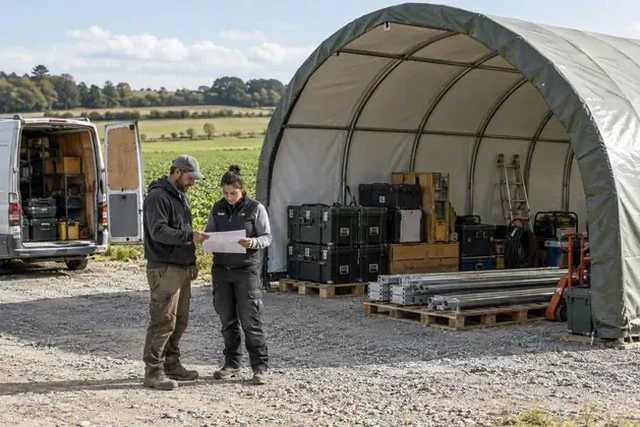
One of the tools that makes these moves easier is setting up a foldable portable structure that serves as a storeroom‚ a crew room or a covered work area and travels with the company from site to site. A structure like this can be put up and folded down quickly and does not require poured foundations or construction work at every new location. The advantage is that at each site the crew gets the same familiar environment‚ with the same layout of shelves‚ tools and equipment. That said‚ it is worth choosing dimensions that suit the range of sites where the company works and checking the ground requirements for setup and anchoring in advance. When the choice is made carefully‚ the structure becomes a permanent part of the company's operational infrastructure.
A Standard Equipment List for Every Site
The simplest and most effective tool for maintaining continuity is a fixed equipment list that accompanies every move between sites. The list includes all the tools‚ materials‚ safety gear and documents needed on the first day at a new site. When each item is checked off before departure and during unloading‚ the chance of forgetting something essential drops significantly. It is worth dividing the list by areas of responsibility so that every team leader knows exactly what to check. Over time the list is updated with the lessons from each project and becomes a knowledge asset for the company.
Documenting and Surveying the Site in Advance
Before the crew arrives at a new site‚ it is a good idea to carry out a preliminary visit and document the conditions on the ground. Check access for heavy vehicles‚ the type of soil‚ the location of power and water points and the right spot for storage and rest areas. Photos and a simple sketch of the site make it possible to plan the layout ahead of time instead of improvising on the first day. A survey like this also reveals constraints‚ such as permitted working hours‚ noise or proximity to neighbors‚ that affect the schedule. A few hours invested at this stage save days of setting up later on.
Power and Water Infrastructure
On a site with no available power‚ work simply does not begin. That is why it is important to find out in advance whether there is an existing connection‚ whether a generator is needed and what output the equipment requires. Water supply for drinking‚ cleaning and the work itself also needs to be planned‚ especially at remote sites. A tidy portable electrical panel with labeled cables and safety breakers shortens connection time and reduces risks. A crew that knows the company's portable infrastructure can set it up again anywhere within a few hours.
Organized and Protected Storage
Tools and materials left outside are exposed to rain‚ sun‚ dust and theft. Organized and protected storage keeps the equipment safe‚ extends its life and makes it possible to find any item quickly. Labeled shelves‚ boxes sorted by tool type and a separate area for hazardous materials are the basis of any site storeroom. When the layout is the same at every site‚ workers know where everything is from the very first day of a new project. A suitable lock and lighting inside the storeroom complete the picture and prevent the loss of expensive equipment.
Worker Welfare
Workers who spend a whole day on site need a shaded or heated place to rest‚ eat and gather briefly at the start of the day. When there is no such place‚ breaks happen in vehicles or by the roadside‚ and fatigue builds up faster. A well-arranged crew corner with a table‚ chairs‚ cold water and power for charging phones improves morale and concentration. It also serves as a place for safety briefings and task coordination‚ so it contributes to order at work. Companies that look after these conditions deal with less staff turnover and fewer absences.
Moving and Logistics Between Projects
The move itself is the most sensitive point in the chain‚ because that is when equipment is dismantled‚ packed and transported. Planning the order of dismantling so that the items needed first at the next site are loaded last saves a great deal of time during setup. It is worth coordinating the transport‚ arrival times and the people responsible for unloading in advance. Clear labeling of boxes and a contents list for each pallet make it easy to check that everything has arrived. A move that is managed like a small project in its own right finishes faster and with fewer problems.
Communication and Remote Monitoring
When the company works at several sites at once‚ management needs to know what is happening at each of them without driving from site to site. Task management apps‚ coordination groups and a short daily report with photos make it possible to follow progress in real time. Security cameras and simple sensors can send alerts about unauthorized entry or a power fault. Organized information from every site helps identify recurring problems and improve processes ahead of the next project. This way operational continuity is maintained even when people and places keep changing.
Safety and Fixed Procedures
Every new site brings new risks‚ so safety procedures need to be fixed and familiar to all workers‚ even when the surroundings change. A short opening briefing on the first day at each site‚ covering access routes‚ the location of first aid equipment and hazard points‚ prepares the crew to work safely. Fencing off work areas‚ clear signage and sufficient lighting after dark reduce the likelihood of accidents. It is important to check that all personal protective equipment has moved with the crew and is in good condition. Consistent adherence to the rules turns them into a habit rather than a demand that only comes up after an incident. Beyond worker safety‚ it is also necessary to think about the environment in which the site operates. Neighbors‚ passers-by and drivers need to know where work is taking place and how to get around it safely. Coordinating road closures‚ working hours and waste removal with the local authority in advance prevents complaints and delays. When the company leaves every site clean and tidy at the end of the job‚ it builds a good reputation that makes the next project easier. Written procedures that are updated according to accumulated experience ensure that this knowledge does not depend on a single person.
Summary
Working at changing sites requires a clear method so that each move does not bring activity to a halt. A standard equipment list‚ an early site survey and planning for power and water shorten the setup time. Protected storage and a well-arranged crew corner look after both equipment and workers and make it possible to get back to routine on the very first day. A planned move and continuous monitoring at every site complete the picture and prevent delays. Companies that adopt these habits finish projects on time and build a reputation for reliability.